Top Used Family SUVs for Australian Families
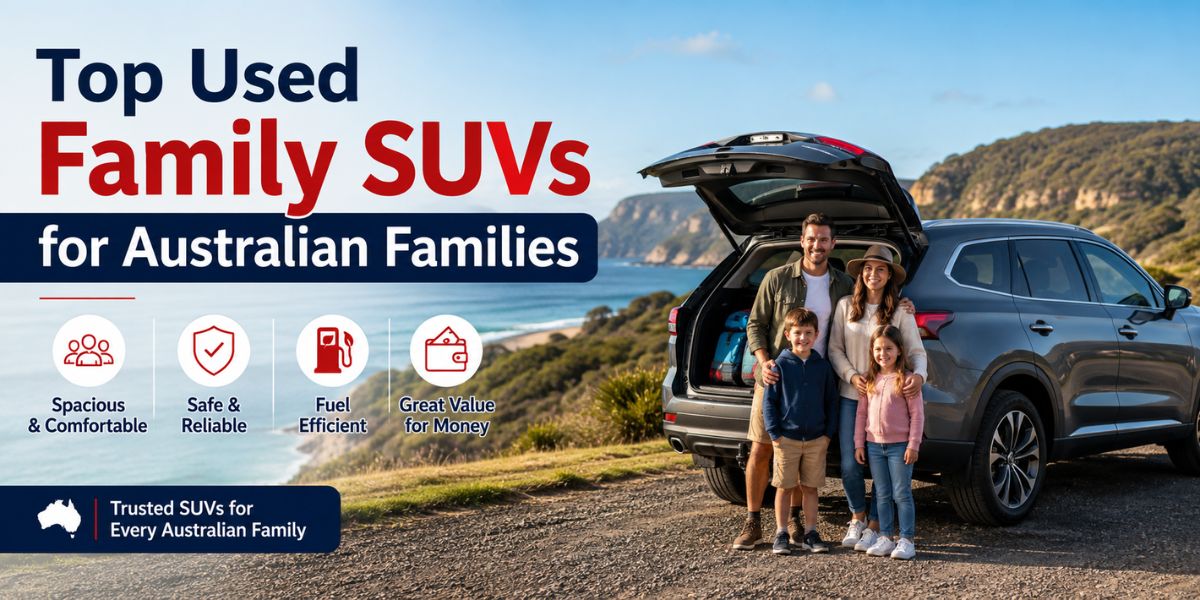

Buying a family SUV can make everyday driving more comfortable when you need extra passenger space, a practical boot and enough room for family belongings. Australian families often rely on their vehicles for school runs, shopping, work, weekend outings and longer road trips, so choosing a suitable SUV requires careful thought. There are many options available in the Australian used-car market, and each model offers different levels of space, comfort, fuel efficiency and features. I recommend looking beyond the vehicle’s appearance and checking its overall condition, service history, kilometres, safety features, fuel use and expected running costs. We should also consider how many people will regularly travel in the vehicle and how much luggage or equipment the family usually carries. By comparing different models and inspecting each vehicle carefully, buyers can find a used family SUV that offers practical features, comfortable driving and good value for everyday Australian travel.
SUVs are a popular choice for Australian families because they offer a practical balance of space, comfort and everyday usability. Compared with smaller cars, many SUVs provide more room for passengers, children’s items, shopping bags, sports equipment and holiday luggage. The higher seating position can also give drivers a clearer view of the road, while many newer models include useful features such as reversing cameras, parking sensors, automatic emergency braking and other safety systems. However, every SUV has different strengths, so families should consider their usual driving needs before choosing a vehicle. Some SUVs are better suited to city driving and school runs, while larger models may be more suitable for long trips, larger families or carrying extra luggage. Therefore, choosing an SUV based on your family’s actual requirements can help you find a vehicle that is practical, comfortable and suitable for everyday Australian driving.
Before buying a used SUV, consider how many passengers will regularly use the vehicle and how much space your family needs. A family with two children may have different requirements from a family with three or four children, so it is important to choose a vehicle that provides enough room for everyone. Check the rear-seat space carefully, especially if you use child seats, and make sure children can sit comfortably without affecting the space needed by those in the front. Boot space is also important because families often need room for prams, school bags, sports equipment, groceries and holiday luggage. In particular, check whether the boot still provides enough usable space when all passengers are seated, as some SUVs may offer plenty of passenger room but limited luggage capacity.
Your normal driving pattern should influence the type of SUV you choose. If most of your trips involve local roads, school runs, shopping and short journeys, a medium-sized SUV may be easier to park, more practical for everyday use and cheaper to operate. On the other hand, families who regularly travel long distances may prefer a larger SUV with comfortable seating, good storage space and a smooth highway drive. Similarly, if parking space is limited at home, work or shopping centres, consider the vehicle’s width, length and turning circle before buying. A large SUV can provide extra passenger and boot space, but it may be harder to park and manoeuvre in tight areas.
The Toyota RAV4 is a popular choice among Australian SUV buyers. It offers useful passenger space, a practical boot and a range of petrol and hybrid options depending on the model year.
A Used Toyota RAV4 can suit families who want a medium-sized SUV for everyday driving and weekend travel. Hybrid versions can also appeal to drivers who want to keep fuel consumption in mind.
When checking a RAV4, look at the service records, kilometres, tyres, brakes and overall condition. If you are comparing several vehicles, note the differences in age, specifications and pricing before making a decision.
A popular model can still have problems if it has not been maintained properly, so the individual vehicle matters just as much as the model.
Families needing additional passenger space may consider the Toyota Kluger. It provides more room than smaller Toyota SUVs and can be suitable for families who regularly travel with several passengers.
A Used Toyota Kluger may be useful for school runs, family holidays and longer journeys. Some versions offer additional seating, which can be helpful for larger households.
However, buyers should also consider fuel consumption and maintenance costs. A larger SUV normally has higher running costs than a smaller vehicle, so these expenses should be included in the family budget.
Before purchasing, I would recommend checking the seating arrangement, boot capacity and access to the rear seats. They should also take the vehicle for a proper test drive to make sure it suits their driving needs.
The Kia Sportage is another SUV that can be worth considering when comparing used family vehicles. It provides a practical cabin, useful boot space and a range of features depending on the model year.
A Used Kia Sportage can suit families looking for a medium-sized SUV without moving into a much larger vehicle. Buyers should compare its price, kilometres, service history and available safety features with other SUVs in the same price range.
Although features can vary between different model years, buyers should pay particular attention to equipment that matters to their family, such as parking cameras, sensors, child-seat mounting points and driver-assistance technology.
Fuel costs can be an important part of family vehicle ownership, especially for households that drive regularly for work, school, shopping and weekend trips. Hybrid SUVs can be a practical option for families who spend a lot of time driving in urban areas, as hybrid technology may help reduce fuel use in certain driving conditions. Families searching for Hybrid Cars for Sale in Melton should compare the vehicle’s purchase price, fuel economy, service history and expected running costs before making a decision. They should also ask about the condition of the hybrid system and check whether the vehicle has been properly maintained. In spite of the potential fuel savings, a hybrid SUV may not suit every family, so factors such as driving habits, budget, vehicle size and how long they plan to keep the car should also be considered.
Safety should be one of the main priorities when choosing a family SUV. Modern vehicles can offer a wide range of safety equipment, but the available features depend on the model and year.
Look for features such as airbags, electronic stability control, reversing cameras, parking sensors, autonomous emergency braking and lane-support systems.
Families with young children should also check child-seat mounting points and rear-seat access. Specifically, make sure the child seats fit correctly without making the front seats uncomfortable.
Safety ratings can also help when comparing different vehicles. However, buyers should still inspect the actual vehicle and check whether the features they need are included in that particular model.
A service history can tell you a lot about how a used SUV has been maintained. Ask to see available service records and invoices before buying.
Regular servicing can help identify whether important maintenance has been carried out at the correct intervals.
If a vehicle has high kilometres but a strong service history, it may still be worth considering. Conversely, a low-kilometre SUV without clear maintenance records may require additional questions.
Clearly, kilometres are only one part of the buying decision. Age, servicing, previous use and overall condition should all be considered together.
Family SUVs can be heavier than smaller passenger cars, so tyres, brakes and suspension deserve careful attention.
Check the tyres for tread depth and uneven wear. Uneven wear may indicate alignment or suspension issues. Listen for unusual noises when driving over bumps and pay attention to how the vehicle brakes.
The steering should feel controlled, and the vehicle should not pull strongly to one side. If you notice anything unusual, ask a qualified mechanic to inspect the SUV before you purchase it.
A pre-purchase inspection can be especially useful if you are buying an older vehicle or one with high kilometres.
Do not limit your search to one model. Comparing several vehicles can help you find better value.
When looking at Second hand SUVs, compare their age, kilometres, service history, fuel type, safety equipment and asking price.
The same applies when searching for Used SUVs from different brands. A Toyota, Kia, Hyundai, Mazda or Mitsubishi may have different strengths, so compare them based on your family’s actual requirements.
If you see a Used SUV for sale at a price that appears attractive, take time to inspect it properly. A low price should not encourage you to ignore warning signs.
Your SUV budget should include more than the purchase price. Consider registration, insurance, fuel, servicing, tyres and possible repairs.
Families should also keep some money aside for unexpected expenses. Even a well-maintained used vehicle can eventually need replacement parts or routine repairs.
If you plan to Buy second hand SUV, compare the total expected ownership cost rather than simply choosing the cheapest vehicle.
Likewise, consider whether a smaller SUV could meet your needs at a lower running cost. Buying a larger vehicle than necessary may increase fuel and maintenance expenses.
When shopping locally, buyers may see vehicles from private sellers, dealerships and used-car businesses. A professional seller should be willing to answer questions about the vehicle and provide relevant information. If you are considering Deol Car Sales, ask about available SUVs, vehicle history, servicing and the documents supplied with the vehicle. The seller is important, but the condition and history of the actual SUV should remain a major part of your decision.
The cheapest SUV to purchase may not always be the cheapest to own over several years. Families should consider fuel consumption, servicing, tyres, insurance and possible repair costs when comparing different vehicles. For example, a smaller SUV may use less fuel than a large seven-seat model, while a hybrid SUV may offer fuel savings for certain types of driving. Before making a decision, estimate how many kilometres your family travels each year and compare the expected fuel costs between different models. Similarly, check the likely servicing and tyre costs, as these expenses can vary between vehicles. Consequently, choosing an SUV based on both the purchase price and long-term running costs can help families manage their budget and avoid unexpected expenses.
There is no single SUV that suits every Australian family, so it is worth comparing several models before making a decision. A Toyota RAV4 can be a practical choice for families looking for a medium-sized SUV with useful passenger and boot space, while the Toyota Kluger may be more suitable for families who need additional seating and room. The Kia Sportage is another option for buyers who want a practical medium-sized SUV with useful features for everyday driving. Similarly, other brands and models may offer suitable choices depending on your budget, family size and driving needs. A Popular Toyota Model may attract many buyers because of its reputation and availability, but popularity should not replace a proper inspection, test drive and price comparison. Ultimately, the right SUV should provide the space, comfort, safety features, fuel efficiency and running costs that suit your family’s everyday needs.
Choosing a used family SUV is an important decision, so taking time to compare different models can help you make the right choice. Families should check the vehicle’s condition, service history, safety features, fuel economy and ongoing costs before making a purchase. I recommend thinking about how the SUV will be used each day, including school runs, work, shopping, weekend trips and family holidays. We should choose a vehicle that suits our family’s size, budget and driving habits rather than selecting one simply because it is popular. With careful research, sensible comparisons and a proper vehicle inspection, Australian families can find a reliable used SUV that provides comfort, practicality and good value for everyday travel.